
Promised Land
- Promised Land
-
PROMISED LAND: ‘The land of promise’ (Heb. 11:9) refers to Canaan before the Israelites entered it under Joshua. By his covenant with Abraham, God promised to make him ‘into a great nation’, to be a ‘blessing to all the peoples on earth’ and have an inheritance of land (Gn. 12:1–2; cf. 12:7; 13:15; 24:7). The patriarchs lived in the land as ‘sojourners’ (Gn. 17:8; 24:4, etc.) but the promise was often repeated (Gn. 26:3–4; 13; 35:12; 48:4; 50:24) and provided sustaining hope for the Israelites after the Exodus (Ex. 3:8, 17; Nu. 10:29, etc.). The promise became reality under Joshua and reached greatest fulfilment under David and Solomon (2 Sa. 3:10; 1 Ki. 4:21; 8:65; cf. Ezk. 47:15–20). The Assyrian and Babylonian invasions led to exile in a ‘strange land’ (Ps. 137:4), yet prophets predicted a ‘restoration’ (Is. 27:12–13; 43:19–21; 60:18; Je. 16:15; 23:8; 30–33; Ezk. 36–37; 47–48; Zp. 3:10) which partially occurred under Zerubbabel, Ezra and Nehemiah. 1Hoad, J. W. L. (1996). Promise. In D. R. W. Wood, I. H. Marshall, A. R. Millard, J. I. Packer, & D. J. Wiseman (Eds.), New Bible dictionary (3rd ed., pp. 963–964). InterVarsity Press.
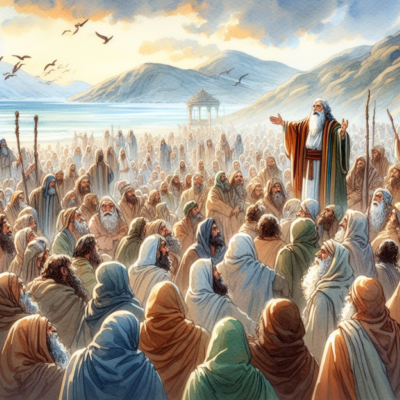
PROMISED LAND Part of God’s covenant with Israel through Abraham (Gen 12:1, 7; 13:15–17; 15:12–21). The promise is inherited by Isaac (Gen 26:3), Jacob (Gen 28:4, 13; 35:12), Joseph (Gen 48:4), and the rest of Jacob’s sons (Gen 46:1–4; 50:24). This land, resembling the Eden that God’s people had lost, would “flow with milk and honey” (Exod 3:8; Num 13:27; Deut 6:3). It is a land otherwise occupied, the land of Canaan, until God gives it as a possession to the Israelites as promised (Gen 12:5; 23:2; Exod 3:17; Lev 14:34; Deut 32:49).
Terms and Boundaries
The Old Testament does not have any direct translation of the term “promise.” The Hebrew terms used interchangeably to refer to the land are אֶ֫רֶץ (erets) and אֲדָמָה (adamah). Although the distinction is subtle, the term erets often refers to the geographical or political expression of the land, whereas adamah describes the agricultural qualities of a land and usually connotes individual ownership. Adamah may be used to strike an emotional chord, especially during the exile, as it indicates the soil of a cultivated homeland, as seen in Ezek 7:2. The land becomes a place of “rest” from their enemies, a settling place (נוח, nwch).
The land is divided up between the tribes of Israel, with the tribes of Gad and Reuben and the half-tribe of Manasseh settling in the Transjordan region outside the land (Num 26:52–56; 32:1–5; Deut 4:38; 12:9; 15:4; Josh 11:23; 13:7–8). The borders of the land are generally delineated in the Abrahamic covenant as stretching “from the river of Egypt to the great river, the river Euphrates” (Gen 15:18 ESV). Later, it includes a southern border from the Dead Sea to Kadesh-Barnea and a northern border from the Mediterranean Sea to Hazar Enan (Num 34:1–5; Josh 15:1–4). The eastern border includes Hazar Enan all the way to the Salt Sea, with the western edge bordering the Mediterranean Sea.Covenant Context
The promised land is central to the covenant God makes with Abraham beginning in Gen 12. Brueggemann suggests that “Israel’s faith is essentially a journeying in and out of land”-they are first rooted in the land of Eden and then expelled (Gen 1–11); in the rest of Genesis they live toward a land of promise (Gen 12–50; Brueggemann, The Land, 13, 15). The expectation of the land promised to Abraham and his descendants is inseparable from the expectation of restored relationship between God and God’s people (Deut 30:19; Alexander, From Paradise, 286).Promised Land as Central Theme
God’s gift of the land is a recurrent theme throughout the Old Testament, beginning with the initial grant made to Abraham and repeated to his descendants with great regularity throughout Genesis (Gen 12:1, 7; 13:15–17; 15:12–21; 26:3; 28:4, 13; 35:12; 46:1–4; 48:4; 50:24). In Exodus, the promise is understood as an inheritance (Exod 6:8; 32:13) and the people receive detailed instruction concerning the land they will inherit as God’s people (Exod 13:5). This pattern of extensive preparation continues into the book of Leviticus (Lev 23:10), leading up to Israel’s failure to inhabit the land in Numbers (Num 32:9–10). Deuteronomy links land with law, emphasizing the nature of the promised land as a gift of grace, “resting solely on Yahweh’s promise to fulfill his word” (Kaiser, A History 132–33); yet the receipt of the inheritance rests on the faithful obedience of the people (Deut 4:5, 14, 25, 40; 6:17–19; 28:9–11).
The rest of Israel’s history can be observed through the lens of land and covenant: from the conquest in Joshua, to the disputes of the Judges, to the wars of the kings, to the warnings of the prophets, to the lost land of the exile, to the rebuilding of the temple. The theme of land maintained its influence in the centuries following the exile, as Jews of the Diaspora held the tension of fulfilling the law outside the land while those in the land desired to be rid of the Roman rulers who challenged their exclusive right to the land. 2Persons, N. (2016). Promised Land. In J. D. Barry, D. Bomar, D. R. Brown, R. Klippenstein, D. Mangum, C. Sinclair Wolcott, L. Wentz, E. Ritzema, & W. Widder (Eds.), The Lexham Bible Dictionary. Lexham Press.The Lexham Bible Dictionary. Lexham Press.
Footnotes:
- 1Hoad, J. W. L. (1996). Promise. In D. R. W. Wood, I. H. Marshall, A. R. Millard, J. I. Packer, & D. J. Wiseman (Eds.), New Bible dictionary (3rd ed., pp. 963–964). InterVarsity Press.
- 2Persons, N. (2016). Promised Land. In J. D. Barry, D. Bomar, D. R. Brown, R. Klippenstein, D. Mangum, C. Sinclair Wolcott, L. Wentz, E. Ritzema, & W. Widder (Eds.), The Lexham Bible Dictionary. Lexham Press.
Discover more from Which god can save?
Subscribe to get the latest posts sent to your email.