
The search results reveal a pattern throughout Scripture where individuals and powers pursue divine status through multiple avenues—not merely moral autonomy, but direct claims to godhood and sovereignty.
Satan himself initiated this rebellion, declaring “I will ascend to the heavens” and “make myself like the Most High,” (Isa 14:12–14) establishing the prototype for human rebellion. Satan’s desire for God’s sovereignty caused his fall from heaven, and this identical desire became the temptation he used against humanity.1
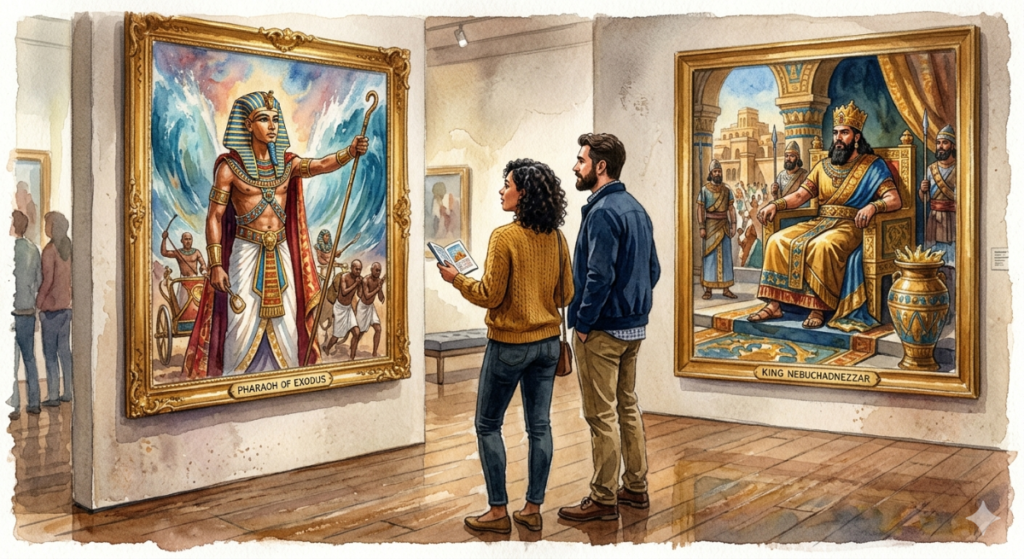
Throughout history, human rulers have echoed this ambition in concrete ways. The ruler of Tyre claimed “I am a god” and sat “on the throne of a god,” (Ezek 28:2–9) while another king exalted himself “above every god and will say unheard-of things against the God of gods.” (Dan 11:36) Herod accepted worship when crowds proclaimed “This is the voice of a god, not of a man,” (Acts 12:21–23) an act that brought divine judgment. The man of lawlessness will “exalt himself over everything that is called God” and proclaim “himself to be God.” (2 Thess 2:3–4)
Beyond direct self-deification, the pattern includes constructing monuments to human achievement: the Tower of Babel was built so inhabitants could “make a name for ourselves,” (Gen 11:4) reflecting the desire to establish independent human legacy and authority. Simon the Sorcerer boasted “he was someone great,” (Acts 8:9–10) claiming divine power through supernatural displays.
Theologically, humans became like God in their ability to choose right from wrong, and fallen humanity now claims the sovereign right to define good and evil for themselves.1 Human will and desire for sovereignty replace God’s sovereignty in defining good and evil.1
The eschatological fulfillment appears in the beast, given authority to utter “proud words and blasphemies” and to “blaspheme God,” (Rev 13:4–8) with all inhabitants worshiping it. (Rev 13:4–8) Each instance reflects the core temptation: displacing God’s authority with human autonomy and power.
1 Eddie Karl Baumann, Worldview as Worship: The Dynamics of a Transformative Christian Education (Eugene, OR: Wipf and Stock, 2011). [See here, here, here.]