
Christmas is the story of a child born into extreme danger. A young couple forced to flee under threat of state violence. A ruler so afraid of losing power that he ordered the deaths of children. This is the world Jesus entered — not a world of sentiment, but a world where the vulnerable suffered under the decisions of the powerful.
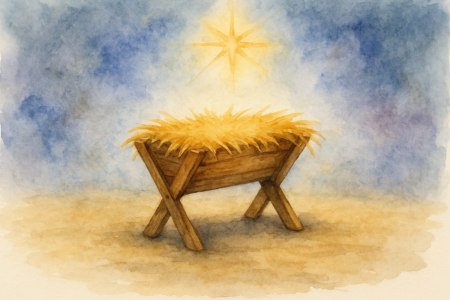
but the one Jesus entered.
Empty, vulnerable, and lit by grace.
And yet, in that world, God chose the path of peace. Not retaliation. Not celebration of an enemy’s death.
Not the logic of Herod, but the self‑giving love that would later teach us to pray for those who persecute us.
That contrast — between the story we celebrate and the impulses we sometimes bless — is worth pausing over, especially when messages of triumph over “dead enemies” are spoken in Jesus’ name on the very day we remember His birth.
The Real Christmas Story
You just read a very brief summary of the world Jesus was born into. Let’s make it a bit more real. Check out a few passages to show the extent of the danger and the horror prevalent in the time and place where Jesus was born.
The beginning of the birth of “God with us”
The Birth of Jesus Christ 🔍
Mt 1:18 This is how the birth of Jesus Christ came about: His mother Mary was pledged to be married to Joseph, but before they came together, she was found to be with child through the Holy Spirit. 19 Because Joseph her husband was a righteous man and did not want to expose her to public disgrace, he had in mind to divorce her quietly.
Mt 1:20 But after he had considered this, an angel of the Lord appeared to him in a dream and said, “Joseph son of David, do not be afraid to take Mary home as your wife, because what is conceived in her is from the Holy Spirit. 21 She will give birth to a son, and you are to give him the name Jesus, because he will save his people from their sins.”
Mt 1:22 All this took place to fulfill what the Lord had said through the prophet: 23 “The virgin will be with child and will give birth to a son, and they will call him Immanuel”—which means, “God with us.”
Mt 1:24 When Joseph woke up, he did what the angel of the Lord had commanded him and took Mary home as his wife. 25 But he had no union with her until she gave birth to a son. And he gave him the name Jesus.
A husband-to-be finds out his future wife is pregnant. And not by him. He thinks divorce. A quiet one, for her sake. But still a divorce. Mary’s future goes from happily married mom-to-be to a divorced single mother. Top of the world to bottom of the barrel. How’s that for a welcome to the world?
But God has other plans. Not only top of the world type plans, but Mary’s Son will be the King of All Kings!
And then this happens.
Sorcerers come to visit the baby, and the King of the Jews wants the baby dead
The Visit of the Magi 🔍
Mt 2:1 After Jesus was born in Bethlehem in Judea, during the time of King Herod, Magi from the east came to Jerusalem 2 and asked, “Where is the one who has been born king of the Jews? We saw his star in the east and have come to worship him.”
Mt 2:3 When King Herod heard this he was disturbed, and all Jerusalem with him. 4 When he had called together all the people’s chief priests and teachers of the law, he asked them where the Christ was to be born. 5 “In Bethlehem in Judea,” they replied, “for this is what the prophet has written:
Mt 2:6 “ ‘But you, Bethlehem, in the land of Judah,
are by no means least among the rulers of Judah;
for out of you will come a ruler
who will be the shepherd of my people Israel.’’”
Mt 2:7 Then Herod called the Magi secretly and found out from them the exact time the star had appeared. 8 He sent them to Bethlehem and said, “Go and make a careful search for the child. As soon as you find him, report to me, so that I too may go and worship him.”
Mt 2:9 After they had heard the king, they went on their way, and the star they had seen in the east went ahead of them until it stopped over the place where the child was. 10 When they saw the star, they were overjoyed. 11 On coming to the house, they saw the child with his mother Mary, and they bowed down and worshiped him. Then they opened their treasures and presented him with gifts of gold and of incense and of myrrh. 12 And having been warned in a dream not to go back to Herod, they returned to their country by another route.
We need to understand, contrary to common belief, the Magi were not celebrated wise men. In the eyes of the Jewish people, they were evil sorcerers. And yet, God chose them to be the first recorded people to bow down to His Son.
And, we see they were also the ones chosen to be the means by which Herod got the news about the baby and was going to kill Him. Again, God intervenes. He sends the Magi home via a path that allowed them to not have to report to Herod. God chose the way of peace for the One who would be called the Prince of Peace.
Of course, that was only one side of the story.
Jesus’ family escapes to Egypt
The Escape to Egypt 🔍
Mt 2:13 When they had gone, an angel of the Lord appeared to Joseph in a dream. “Get up,” he said, “take the child and his mother and escape to Egypt. Stay there until I tell you, for Herod is going to search for the child to kill him.”
Mt 2:14 So he got up, took the child and his mother during the night and left for Egypt, 15 where he stayed until the death of Herod. And so was fulfilled what the Lord had said through the prophet: “Out of Egypt I called my son.”
Mt 2:16 When Herod realized that he had been outwitted by the Magi, he was furious, and he gave orders to kill all the boys in Bethlehem and its vicinity who were two years old and under, in accordance with the time he had learned from the Magi. 17 Then what was said through the prophet Jeremiah was fulfilled:
Mt 2:18 “A voice is heard in Ramah,
weeping and great mourning,
Rachel weeping for her children
and refusing to be comforted,
because they are no more.”
So, the Magi flee back to the east, and Jesus’ family flees to Egypt. Yeah – Egypt, the place where the Israelites, God’s chosen people, were held as slaves centuries earlier.
Was there violence to free them? No. Moses led them from Pharaoh. The violence that did take place was because Pharaoh changed his mind and decided to pursue them.
Was there violence to free Jesus? No, God led them to safety with no violence. The violence that did take place was the murders of innocent children, two years old and younger, was due to Herod’s fear and desire for power.
That wasn’t the end of the family’s worries though.
There was still more danger in Jesus’ early days.
The Return to Nazareth 🔍
Mt 2:19 After Herod died, an angel of the Lord appeared in a dream to Joseph in Egypt 20 and said, “Get up, take the child and his mother and go to the land of Israel, for those who were trying to take the child’s life are dead.”
Mt 2:21 So he got up, took the child and his mother and went to the land of Israel. 22 But when he heard that Archelaus was reigning in Judea in place of his father Herod, he was afraid to go there. Having been warned in a dream, he withdrew to the district of Galilee, 23 and he went and lived in a town called Nazareth. So was fulfilled what was said through the prophets: “He will be called a Nazarene.”
Finally, it appears to be over. But it’s not. Even when it was safe to return to Israel, it wasn’t safe to go back to the place they’d called home.
Peace – not Violence
All through this, we saw that God’s way was the one of peace and non-violence. In every case, the way of violence was the Jewish Kings – Herod and his son. And those who followed the deadly, murderous orders.
Every step of the way, God chose the path of peace for His son. It was a sign of what was to come. The child born into such a dangerous world was protected, peacefully, until the time came for Him to fulfill prophecy.
Maybe we don’t like the prophecy, but throughout the New Testament books after the Gospels, beginning in Acts, we see the path foretold for followers of the Prince of Peace. In so many cases, it’s a violent end. An end that comes about because of our choice to follow the Prince of Peace.
Even before any discussion of the End Times, Jesus warned His disciples about this when He sent them out into the world.
Jesus Sends Out the Twelve 🔍
10:2-4 pp — Mk 3:16-19; Lk 6:14-16; Ac 1:13
10:9-15 pp — Mk 6:8-11; Lk 9:3-5; 10:4-12
10:19-22 pp — Mk 13:11-13; Lk 21:12-17
10:26-33 pp — Lk 12:2-9
10:34, 35 pp — Lk 12:51-53
Mt 10:1 He called his twelve disciples to him and gave them authority to drive out evil spirits and to heal every disease and sickness.
Mt 10:2 These are the names of the twelve apostles: first, Simon (who is called Peter) and his brother Andrew; James son of Zebedee, and his brother John; 3 Philip and Bartholomew; Thomas and Matthew the tax collector; James son of Alphaeus, and Thaddaeus; 4 Simon the Zealot and Judas Iscariot, who betrayed him.
Mt 10:5 These twelve Jesus sent out with the following instructions: “Do not go among the Gentiles or enter any town of the Samaritans. 6 Go rather to the lost sheep of Israel. 7 As you go, preach this message: ‘The kingdom of heaven is near.’ 8 Heal the sick, raise the dead, cleanse those who have leprosy, drive out demons. Freely you have received, freely give. 9 Do not take along any gold or silver or copper in your belts; 10 take no bag for the journey, or extra tunic, or sandals or a staff; for the worker is worth his keep.
Mt 10:11 “Whatever town or village you enter, search for some worthy person there and stay at his house until you leave. 12 As you enter the home, give it your greeting. 13 If the home is deserving, let your peace rest on it; if it is not, let your peace return to you. 14 If anyone will not welcome you or listen to your words, shake the dust off your feet when you leave that home or town. 15 I tell you the truth, it will be more bearable for Sodom and Gomorrah on the day of judgment than for that town. 16 I am sending you out like sheep among wolves. Therefore be as shrewd as snakes and as innocent as doves.
Mt 10:17 “Be on your guard against men; they will hand you over to the local councils and flog you in their synagogues. 18 On my account you will be brought before governors and kings as witnesses to them and to the Gentiles. 19 But when they arrest you, do not worry about what to say or how to say it. At that time you will be given what to say, 20 for it will not be you speaking, but the Spirit of your Father speaking through you.
Mt 10:21 “Brother will betray brother to death, and a father his child; children will rebel against their parents and have them put to death. 22 All men will hate you because of me, but he who stands firm to the end will be saved. 23 When you are persecuted in one place, flee to another. I tell you the truth, you will not finish going through the cities of Israel before the Son of Man comes.
…
Ouch!
That sounds bad. And it is. And yet, it is what we sign up for. We just don’t want that. But it is what we were told.
The real problem is – it requires a huge amount of trust. And faith. And strength. None of which we have on our own. We must be willing to fully place our lives in God’s hands.
The way of Jesus has always stood in contrast to the world’s celebration of power, fear, and retribution. And Scripture warns that as time moves toward its fulfillment, the pressure to abandon His way will only grow stronger. I’ll explore that more fully in another post, but for now the question is simple: are we becoming people of the manger, or people of the world? Because the child in the manger didn’t come to mirror the world’s logic — He came to overturn it with a light that darkness cannot overcome.
One more thing – Love
So far, “love” has appeared one time. One. And yet, the Bible tells us, “God is love”.
God’s Love and Ours 🔍
1Jn 4:7 Dear friends, let us love one another, for love comes from God. Everyone who loves has been born of God and knows God. 8 Whoever does not love does not know God, because God is love. 9 This is how God showed his love among us: He sent his one and only Son into the world that we might live through him. 10 This is love: not that we loved God, but that he loved us and sent his Son as an atoning sacrifice for our sins. 11 Dear friends, since God so loved us, we also ought to love one another. 12 No one has ever seen God; but if we love one another, God lives in us and his love is made complete in us.
1Jn 4:13 We know that we live in him and he in us, because he has given us of his Spirit. 14 And we have seen and testify that the Father has sent his Son to be the Savior of the world. 15 If anyone acknowledges that Jesus is the Son of God, God lives in him and he in God. 16 And so we know and rely on the love God has for us.
God is love. Whoever lives in love lives in God, and God in him. 17 In this way, love is made complete among us so that we will have confidence on the day of judgment, because in this world we are like him. 18 There is no fear in love. But perfect love drives out fear, because fear has to do with punishment. The one who fears is not made perfect in love.
1Jn 4:19 We love because he first loved us. 20 If anyone says, “I love God,” yet hates his brother, he is a liar. For anyone who does not love his brother, whom he has seen, cannot love God, whom he has not seen. 21 And he has given us this command: Whoever loves God must also love his brother.
I highlighted portions of the text above. Of course, the entire passage applies to us, but I think those are especially important here.
One big question that arises is this: who should we love? Jesus told us to love even our enemies. But this message often gets lost. I read many commentaries saying this was only for fellow Christians. However, based on Jesus’ own words, I prefer this interpretation:
11 Dear friends, if God loved us in this way Our love to one another is simply God’s love to us, flowing into us, and flowing out again. That is all it is. “In this is love: not that we have loved God, but that he loved us,” and then we love others. Observe, then, that since the love of God is the source of all true love in us, so a sense of that love stimulates us. Whenever you feel that you love God, you overflow with love to all God’s people. It is when you get to doubt the love of God that you grow hard and cold, but when you are fired with the love of a dying Savior who gave Himself for you, you feel as if you loved every beggar in the street, and you long to bring every harlot to Christ’s dear feet; you cannot help it. If Christ baptizes your heart into His love, you will be covered with it, and filled with it. 1Spurgeon, C. (2014). Spurgeon Commentary: 1 John (E. Ritzema, Ed.; 1 Jn 4:11). Lexham Press.
Notice:
when you are fired with the love of a dying Savior who gave Himself for you, you feel as if you loved every beggar in the street, and you long to bring every harlot to Christ’s dear feet; you cannot help it.
I feel like one problem with even trying to interpret God’s love as only being required for other believers is this “little” thing known as The Great Commission. If we’re to lead others to Christ as commanded, we cannot begin by hating anyone who isn’t already a follower!
This is made even more clear in something Paul wrote on the topic.
Love 🔍
Ro 12:9 Love must be sincere. Hate what is evil; cling to what is good. 10 Be devoted to one another in brotherly love. Honor one another above yourselves. 11 Never be lacking in zeal, but keep your spiritual fervor, serving the Lord. 12 Be joyful in hope, patient in affliction, faithful in prayer. 13 Share with God’s people who are in need. Practice hospitality.
Ro 12:14 Bless those who persecute you; bless and do not curse. 15 Rejoice with those who rejoice; mourn with those who mourn. 16 Live in harmony with one another. Do not be proud, but be willing to associate with people of low position. Do not be conceited.
Ro 12:17 Do not repay anyone evil for evil. Be careful to do what is right in the eyes of everybody. 18 If it is possible, as far as it depends on you, live at peace with everyone. 19 Do not take revenge, my friends, but leave room for God’s wrath, for it is written: “It is mine to avenge; I will repay,” says the Lord. 20 On the contrary:
“If your enemy is hungry, feed him;
if he is thirsty, give him something to drink.
In doing this, you will heap burning coals on his head.”
Ro 12:21 Do not be overcome by evil, but overcome evil with good.
The one thing we’re told to hate is exactly that – a thing. Do not hate a person – hate the thing the person does. But still treat the person with love. Remember that God’s loves that person and desires that they become a believer. And maybe – we’re the ones He’d like to plant a seed in that person. Very hard to do if we hate them.
If God is love, and if we are called to reflect His light into a world that so often prefers the shadows, then anything that celebrates hatred or death should give us pause — especially when it’s spoken in His name. Which brings me to the message that surfaced yesterday.
A Christmas Message Celebrating Dead Enemies
Here’s the heading I read that shocked me. Not just for what it said, but for when it came out.
Trump announces the US has bombed Nigeria
Trump announces the US has bombed Nigeria
Story by Michael Luciano – read on msn.com news
I read it on December 26th. The day after Christmas. The article didn’t specify when the attack happened. It was on Christmas Day.
But that wasn’t the end. The following message was posted by the President on his social media account, according to the article.
Tonight, at my direction as Commander in Chief, the United States launched a powerful and deadly strike against ISIS Terrorist Scum in Northwest Nigeria, who have been targeting and viciously killing, primarily, innocent Christians, at levels not seen for many years, and even Centuries! I have previously warned these Terrorists that if they did not stop the slaughtering of Christians, there would be hell to pay, and tonight, there was. The Department of War executed numerous perfect strikes, as only the United States is capable of doing. Under my leadership, our Country will not allow Radical Islamic Terrorism to prosper. May God Bless our Military, and MERRY CHRISTMAS to all, including the dead Terrorists, of which there will be many more if their slaughter of Christians continues.
DONALD J. TRUMP
PRESIDENT OF THE UNITED STATES OF AMERICA
Story by Michael Luciano – read on msn.com news
This message should catch our attention.
Maybe especially at this time of the year. For Christians, we just celebrated the birth of our Savior. There’s a passage in Isaiah about this very event. One we should reflect on. Especially at this time, with this event taking place.
To Us a Child Is Born 🔍
…
Isa 9:5 Every warrior’s boot used in battle
and every garment rolled in blood
will be destined for burning,
will be fuel for the fire.
Isa 9:6 For to us a child is born,
to us a son is given,
and the government will be on his shoulders.
And he will be called
Wonderful Counselor, Mighty God,
Everlasting Father, Prince of Peace.
…
Yes, the Prince of Peace. We already read the warning about God claiming vengeance for His own. And now the head of our government, who claims to be a Christian, is taking vengeance, allegedly for God’s people – Christians. But many who were killed by those who were bombed were not Christians. So, it was not specifically for persecuting Christians – unless the bombing really was only retaliation for certain people and no concern whatsoever for the other victims of the unspecified group that was bombed.
Then, we bombed them on Christmas day. The day Christians celebrate the One known as the Prince of Peace.
Finally, there’s this: MERRY CHRISTMAS to all, including the dead Terrorists, of which there will be many more if their slaughter of Christians continues
Was this all just done in God’s name?
Are we – Christians – OK with this?
Are we – Christians – OK with so many of the people who did this, also leading us to believe this is actually an appropriate Christian action?
We read about the time and place where Jesus was born. We saw how God responded to all that attempted violence against His Son with peaceful actions. And the Bible tells us His birth was at the perfect time. That says something about us – and about His love for us.
We also know that, when the time was right, Jesus was tortured and suffered a horrible death. For us. Yes, the Prince of Peace was violently murdered by the very people He came to save. No – I don’t mean the Jews. Nor do I mean the Romans. I mean every single one of us. Including me and you.
What have we become when our leaders do things like this in God’s Name on a day when we celebrate the birth of His Son – known as The Prince of Peace?
An invitation to reflect on “MERRY CHRISTMAS to all, including the dead Terrorists”
Moments like yesterday remind us that Jesus can’t be reduced to a moral mascot for whatever cause we want to bless. He didn’t leave us that option. His life, His words, and His cross force us to decide whether we will actually follow Him — or simply use His name while living by the world’s logic.
The way of Jesus has always stood in contrast to the world’s celebration of power, fear, and retribution. And Scripture warns that as time moves toward its fulfillment, the pressure to abandon His way will only grow stronger. I’ll explore that more fully in another post, but for now the question is simple: are we becoming people of the manger, or people of the world?
And perhaps this Christmas, that question is enough to sit with.
Recommendations for further reflection

Why does Christmas matter?
Why Does Christmas Matter? Christmas is more than lights, gifts, and traditions. It’s the culmination of Advent — a season of waiting, repentance, and hope — fulfilled in the birth of Jesus. This reflection explores both the secular celebrations and the sacred meaning, asking what truly matters when we mark this season.
If you’d like a deeper look at what Mary, Joseph, and Jesus actually endured in those early days — the fear, the flight, and the violence that shaped their story — I’ve written a fuller reflection you can explore. It helps frame why the Christmas story is not sentimental but profoundly human, and why it matters for how we respond to violence today.

Would Jesus heal an ISIS fighter?
Would Jesus heal an ISIS fighter?
But maybe just as important is the answer to why this question is so important.
If you’d like to explore this tension further, I wrote a short reflection years ago on whether Jesus would heal someone we consider an enemy today.
I wrote this more than 12 years ago, so it’s in a very old format. I’ll migrate it over the next few days so you can read it.
I asked Copilot to review it to see how it would like up with what you just read. I was happy to find out my feelings about this haven’t changed in all these years:
[The] post is highly relevant to what you’re writing today. In fact, it’s almost uncanny how well it pairs with your new Christmas piece. The themes line up perfectly:
- Jesus’ response to violent enemies
- The contrast between His way and the world’s way
- The danger of celebrating death
- The universality of God’s mercy
- The call to consistency in how we treat “the other”
Footnotes:
- 1Spurgeon, C. (2014). Spurgeon Commentary: 1 John (E. Ritzema, Ed.; 1 Jn 4:11). Lexham Press.
Discover more from Which god can save?
Subscribe to get the latest posts sent to your email.